



Sustainability is no longer a ‘nice to have’ in farm shops, food halls and premium retail. It is shaping product ranges, influencing packaging decisions and raising expectations from shoppers who care deeply about provenance, quality and impact.
As premium retailers look for practical ways to reduce food waste and cut packaging, while maintaining the high standards their customers expect, one category is being viewed differently: frozen. In a loose format, it offers a straightforward way to tackle some of the sector’s biggest sustainability pressures without compromising on quality or craftsmanship.
Fieldfare has championed loose frozen formats for decades, built around the idea that shoppers should be able to buy exactly what they need and nothing more.
Food waste is the biggest sustainability issue in plain sight
Packaging often dominates sustainability headlines, but food waste remains one of the most significant environmental challenges facing the food industry. For farm shops, food halls and delis, the challenge can be nuanced. Offering beautiful, fresh, quality-led ranges is central to the customer experience, yet short shelf life and the desire to provide breadth and abundance can increase the risk of waste. For shoppers, it often comes down to overbuying, particularly when products are only available in fixed pack formats.
Reducing food waste therefore starts with offering formats that are built for flexibility. Frozen naturally supports that shift. Its longer shelf life reduces in-store risk, while giving shoppers more time to use what they buy at home. When combined with a loose format, it provides flexibility without excess. Frozen fruit and vegetables in particular offer another advantage. Freezing locks in freshness and nutrients at peak, without the need for added preservatives, helping premium retailers offer quality-led ingredients.
Changing shopping habits
Premium retail shoppers tend to be more engaged in the shopping experience. Farm shops and food halls are destinations where browsing, discovery and product provenance matter. At the same time, household dynamics are evolving. Fieldfare’s research shows that nearly half (49%) of Brits eat different or altered dishes at the same meal, and 38% say being able to choose the right portion size is a priority when shopping.[1] Mealtimes are becoming more personalised, households are smaller and diets are more varied.
Even in premium retail, fixed pack sizes do not always reflect real life. Loose frozen responds directly to this shift. Scoop-your-own frozen formats allow shoppers to take exactly what they need, not more and not less. This supports thoughtful purchasing and helps limit unnecessary waste without compromising on quality.
Packaging pressures and how frozen fits in
Packaging remains firmly under scrutiny. The UK’s Extended Producer Responsibility (EPR) for packaging makes producers responsible for the full cost of managing packaging waste, including its collection, recycling and disposal. Its aim is to reduce overall packaging use and improve sustainability across the supply chain.
While EPR is targeted at producers, its impact will be felt across the wider retail landscape. Packaging formats are increasingly examined by both regulators and shoppers who expect responsible sourcing and minimal waste. Loose frozen directly supports these expectations. By reducing reliance on pre-packed formats, it lowers the volume of packaging entering stores and homes, aligning naturally with the values of sustainability-conscious premium shoppers.
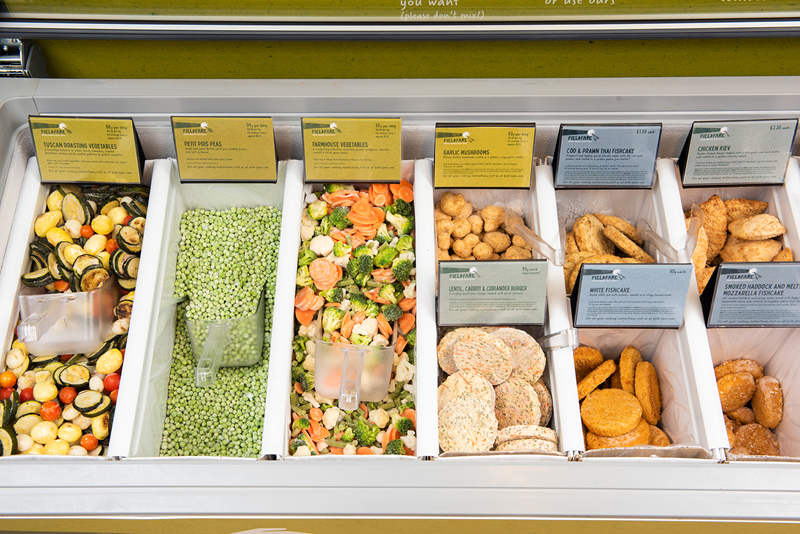
Fieldfare’s range is predominantly sold loose, with over 90% of products sold packaging-free, supporting retailers looking to reduce unnecessary packaging without compromising on quality or choice.
The loose frozen opportunity
Frozen has long been associated with practicality, but in premium retail it is increasingly being recognised as a way to shop more consciously. One of its greatest advantages is simple: it gives people more time. With a longer shelf life, shoppers have greater flexibility to use what they buy, reducing the risk of food being forgotten or discarded. When combined with a loose format, frozen becomes more than a storage solution. It supports portion flexibility and reduces unnecessary packaging, while still delivering quality and craftsmanship.
Loose frozen allows shoppers to buy exactly what they need, whether that’s a single portion, a handful of meal components or just enough for a weekend gathering. It fits naturally with premium shopping behaviours, where customers tend to curate meals thoughtfully and buy little and often for specific occasions.
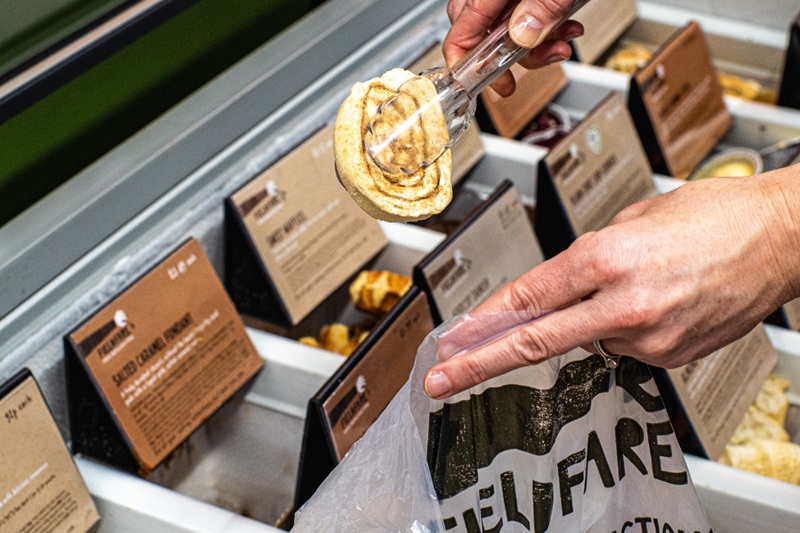
Fieldfare’s scoop-your-own loose frozen format is designed around this shift, empowering shoppers to take exactly what they need, whether that is a single portion for a smaller household meal or enough for entertaining, making it easier to plan, store and enjoy food fully. It also responds to growing demand for lower-packaging options. Fieldfare’s research found that over a third of consumers consider less packaging or ‘plastic free’ important when shopping.[1]
For farm shops and food halls, this presents a clear opportunity. Well-curated loose frozen ranges can make the freezer fixture feel aligned with the rest of a premium offer, reflecting the same focus on quality, thoughtfulness and values, rather than feeling like an afterthought.
Frozen is also increasingly supporting premium accessible indulgence, giving shoppers the chance to enjoy high-quality treats and meal components with less waste and less commitment than buying full fresh packs.
A category worth rethinking
Sustainability in premium retail does not have to mean complex initiatives or costly reinvention. Often, the most effective changes are format-led, supporting how people genuinely shop while reducing waste behind the scenes.
Frozen, and particularly loose frozen, shows how environmental responsibility and product quality can sit comfortably together. It helps reduce food waste, limits packaging and allows retailers to offer flexibility without compromising on standards. As sustainability expectations continue to rise, the opportunity may already be in store. For many premium retailers, it starts in the freezer aisle.
Visit Fieldfare’s website to find out more.
[1] Total sample size: 2,150 adults. Fieldwork was undertaken between 14th - 15th February 2024. The survey was carried out online by YouGov. The figures have been weighted and are representative of all UK adults (aged 18+)


